From Eden to Resurrection: The Work of the Gardener
God communicates the same message throughout Scripture using different methods—through prophecy, events, symbols, and pictures. Some are loud and obvious, like direct prophecies that point to Jesus. Others are more subtle, woven into the narrative, easy to miss if we rush through the text.
One of those quieter pictures begins in the garden.
📖 Genesis 2:15 (NIV)
“The Lord God took the man and put him in the Garden of Eden to work it and take care of it.”
One of Adam’s primary assignments was to tend the garden.
To “work” it carries the idea of cultivating, serving, and laboring.
To “keep” it means to guard, watch over, and protect.
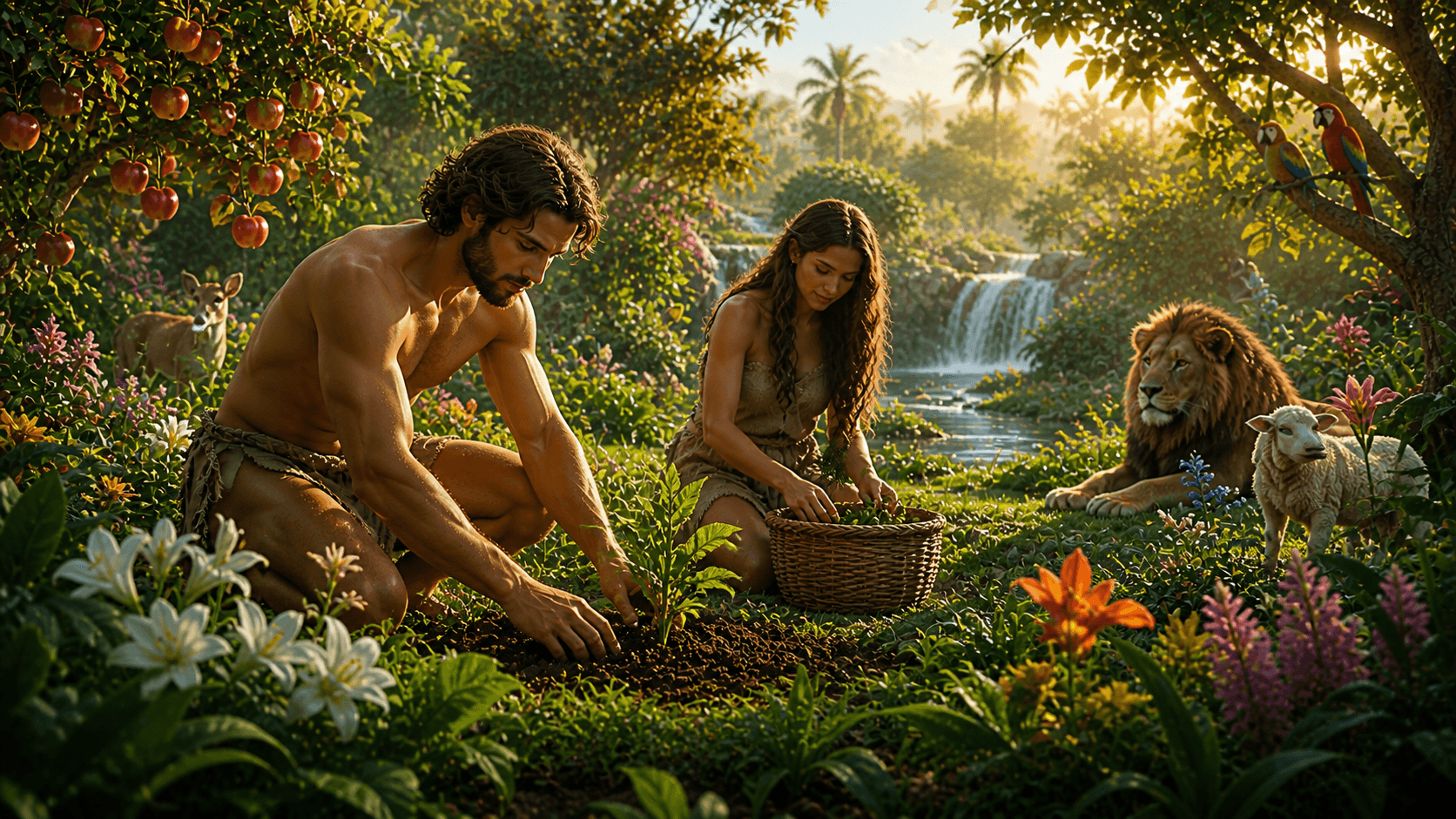
These are the essential responsibilities of a gardener.
A few verses later, we see another layer of responsibility given to Adam:
📖 Genesis 2:19–20
“The Lord God formed every beast… and brought them to Adam to see what he would call them…”
God did the creative work—He made everything. Yet He chose to involve Adam in the process by giving him the authority to name the animals. Not because God lacked ability, but because He is relational and inclusive in how He governs.
We see this same pattern later when God engages Abraham before the judgment of Sodom and Gomorrah. God invites participation.
But we also know how the story unfolds.
Adam and Eve were deceived, and the responsibility entrusted to them was not upheld. The garden was lost.
THE NEW GARDENER
After the resurrection, there is a subtle but striking moment:
📖 John 20:14–16 (NIV)
Mary Magdalene turned and saw Jesus standing there, but she did not realize that it was Jesus.
Thinking He was the gardener, she said,
“Sir, if you have carried Him away, tell me where you have put Him…”
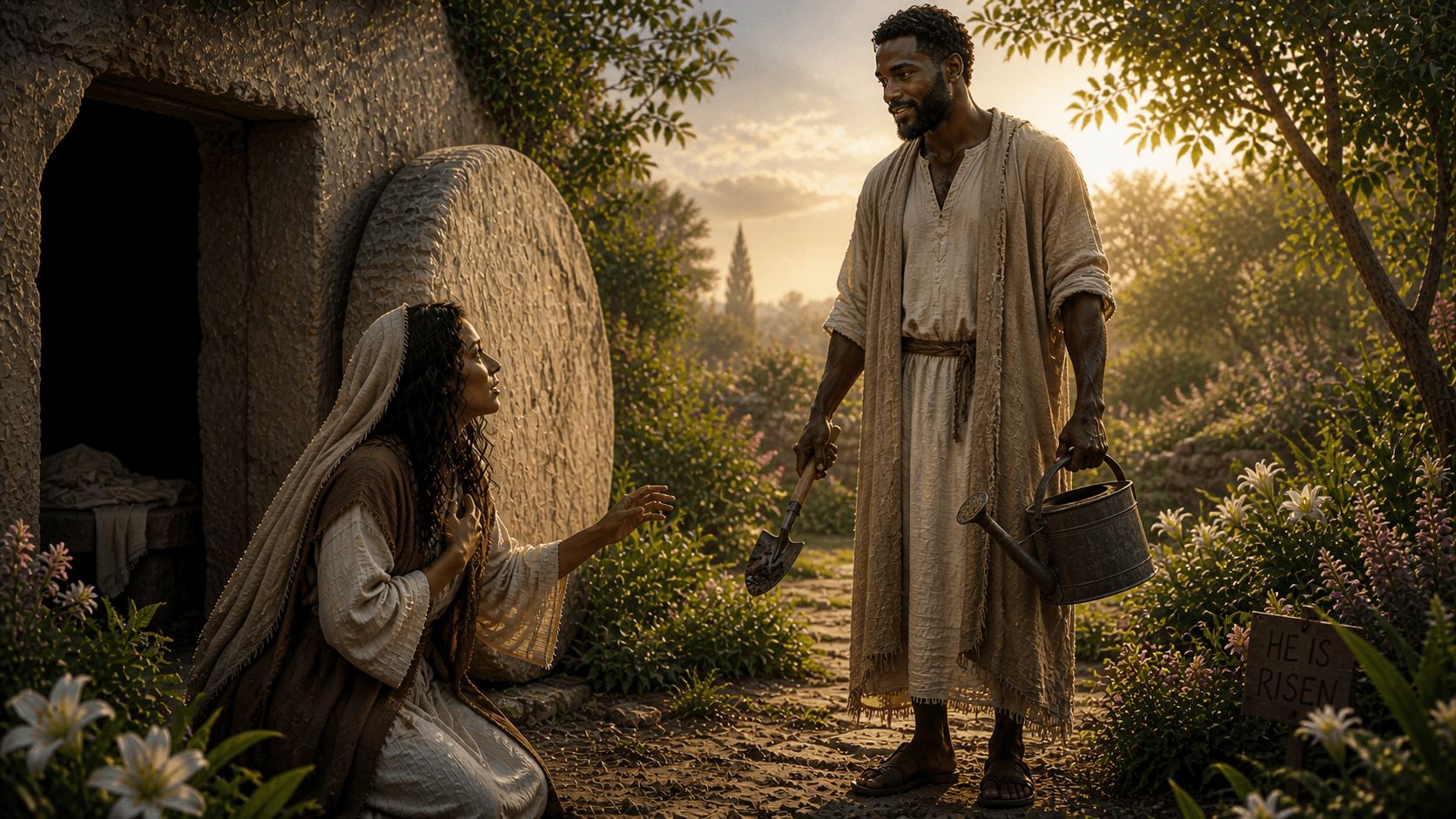
Scripture does not say that Jesus intentionally appeared as a gardener. But it’s hard to ignore the echo. Jesus most likely appeared as a gardner because she looked at Him and did not recognized Him.
The first Adam was placed in a garden and given the responsibility to tend it.
Now, after the resurrection, the risen Christ stands in a garden—and is mistaken for a gardener.
At the very least, the imagery invites us to look deeper.
JESUS AND ADAM
The New Testament presents Jesus as the “last Adam,” drawing a deliberate contrast between the first man and Christ.
Through Adam’s disobedience in the garden, sin and death entered the world, affecting all humanity. But through Jesus’ obedience, righteousness and life are made available to all.
As Paul explains:
📖 Romans 5:19
“For as by one man’s disobedience many were made sinners, so by one man’s obedience many will be made righteous.”
Adam represents the beginning of fallen humanity—formed from the dust, yet failing under temptation. Jesus, though fully human, stands as the faithful one who overcomes where Adam did not.
This contrast reaches its clearest expression here:
📖 1 Corinthians 15:22, 45
“For as in Adam all die, so in Christ all will be made alive.”
“The last Adam, a life-giving spirit.”
Adam brought death into human experience. Christ inaugurates a new creation—restoring life and communion with God. Where Adam’s act led to separation, Jesus’ obedience—even to the point of death—ushers in reconciliation. He is not just a parallel to Adam, but the fulfillment of what humanity was always meant to be.
THE GARDEN AND THE SOUL
But it goes even deeper.
Adam was placed in a garden to cultivate, guard, and sustain it—and he failed.
What Adam could not uphold, Christ now restores and fulfills.
📖 Genesis 2:15
“The Lord God took the man and put him in the Garden of Eden to work it and take care of it.”
That same language—cultivate, guard, watch over—points beyond a physical garden.
Throughout Scripture, the condition of the human heart is often described in agricultural terms. Jesus Himself speaks of the heart as soil:
📖 Matthew 13:23
“The seed falling on good soil refers to someone who hears the word and understands it…”
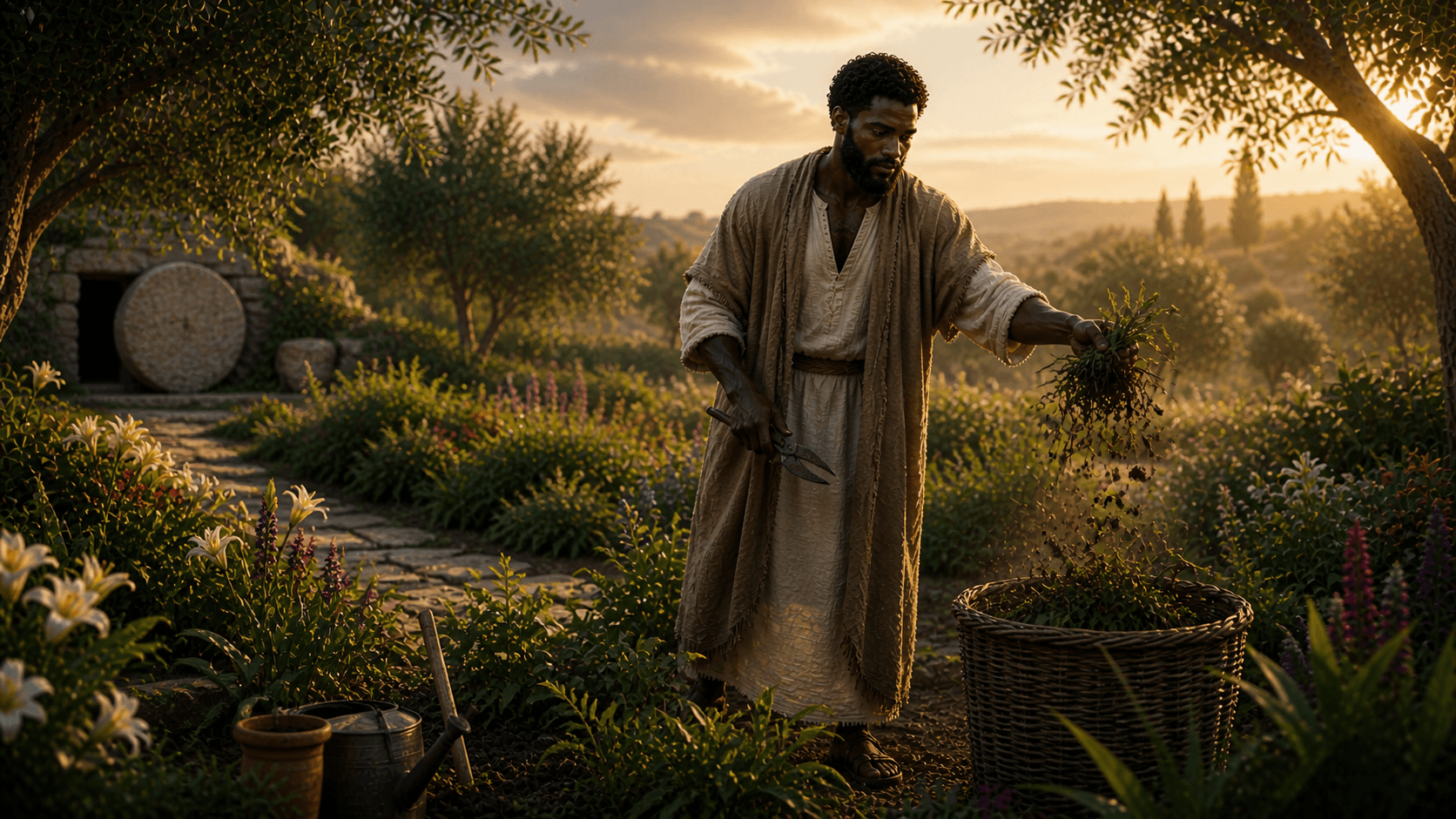
The garden, then, becomes a picture of the inner life—the soul. And this is where the work of Christ becomes deeply personal. He is the true source of life—the one who cultivates, prunes, sustains, and restores. What Adam lost externally, Christ restores internally.
- He removes what does not belong (Weed).
- He nurtures what brings life.
- He watches over and preserves.
- He Prunes
- He Sustains
- He Restores
GRACE: THE RESTORED ORDER
This is grace.
It is not about striving to produce life on our own. It is about receiving life from the One who gives it. Christ does not merely give instructions—He becomes the source.
He does not simply command growth—He produces it.
Our role is not to manufacture transformation, but to remain in Him.
To trust.
To receive.
To believe in His finished work.
Because in the end, the restoration of the garden was never going to come through Adam’s effort—but through Christ.