From the Rock to the River: The Meaning of Sukkot
In the last piece, we explored Moses striking the rock twice. We explained that the rock was a type and shadow pointing directly to Jesus Christ. The rock was to be struck once, and Moses did that. This signified that Jesus would die once to pay the debt for our sins.
On the second occasion, however, God instructed Moses to speak to the rock. When Moses disobeyed and struck it again, God counted it as unbelief. The natural consequence of unbelief is a lack of intimacy with God. This is why Moses was not permitted to lead the people into the Promised Land. The Promised Land ultimately points to a place of rest and intimacy with God.
But there is another part of this story we did not explore—the water.
What Does the Water Represent?
Throughout Scripture, we see a consistent pattern: living water represents the Holy Spirit.
So when we revisit the story of Moses prophetically, the deeper meaning becomes clearer. The physical thirst of the Israelites points to a deeper spiritual reality—a longing for the life of God.
The rock is the source of the water for God’s people. It is through Jesus Christ that we encounter the Holy Spirit.
God revealed this connection both in the Old and New Testaments:
Isaiah 44:3
“I will pour water on the thirsty land… I will pour My Spirit upon your offspring…”
The first time the Israelites asked for water, the rock was struck. This points to the death of Christ—the moment through which life would be made available.
John 20:22
“And when He had said this, He breathed on them and said to them, ‘Receive the Holy Spirit.’”
The Gospel and the Spirit
The second time the people needed water, Moses was instructed to speak.
Speak what exactly? The Gospel.
The Holy Spirit Himself is the power of God at work in the Gospel. The power of the Gospel is not abstract—it is the Holy Spirit Himself working through it. As it is written:
“The gospel… is the power of God for salvation” (Romans 1:16)
“You will receive power when the Holy Spirit has come upon you” (Acts 1:8)
This shows that the power within the Gospel is the Holy Spirit Himself. He is the One who brings it to life, who illuminates the truth, and who causes it to take root in the hearts of those who believe. He activates the Word, making it more than information—it becomes a living encounter with God. He is the One who quenches our spiritual thirst.
This is why, even as the Gospel is being preached, the Spirit moves:
“While Peter was still speaking these words, the Holy Spirit fell on all who heard the word” (Acts 10:44)
Paul confirms the same pattern:
“In demonstration of the Spirit and of power” (1 Corinthians 2:4–5)
“Received the Spirit… by hearing with faith” (Galatians 3:2)
The Holy Spirit is not separate from the Gospel’s power—He is its power.
The Pattern of Salvation
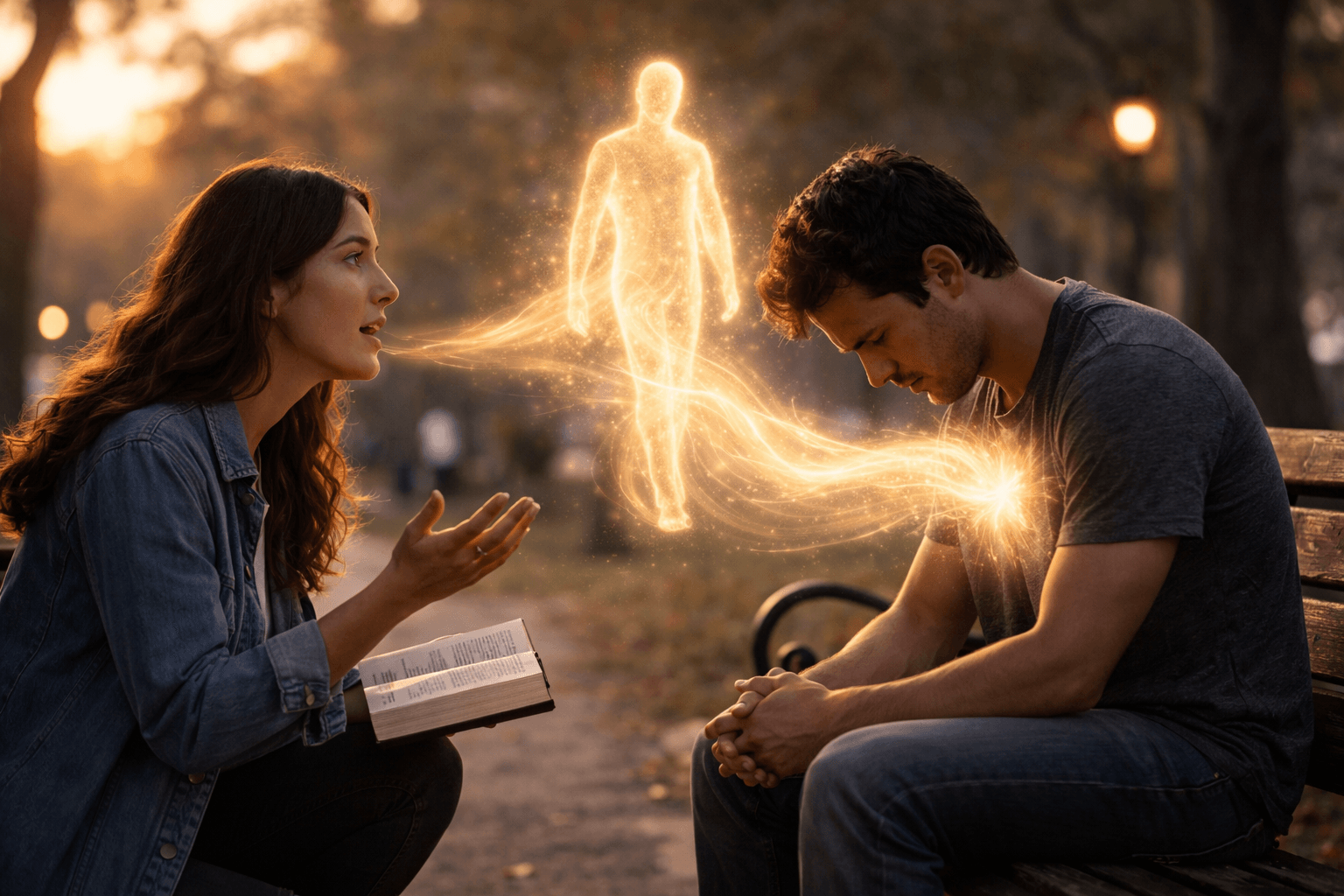
When we return to Moses, the picture becomes complete.
After the rock was struck once, Moses’ role was simply to speak. In other words, it is the proclamation of the Word—the Gospel of Jesus Christ—that releases the living water.
This story reveals the pattern of salvation:
- Christ was struck once
- The Gospel is proclaimed
- The Holy Spirit brings life
The Law and the Feast of Tabernacles
Jesus directly addressed this during the Feast of Tabernacles.
John 7:37–39
“Let anyone who is thirsty come to me and drink… rivers of living water will flow from within them.”
(By this He meant the Spirit…)
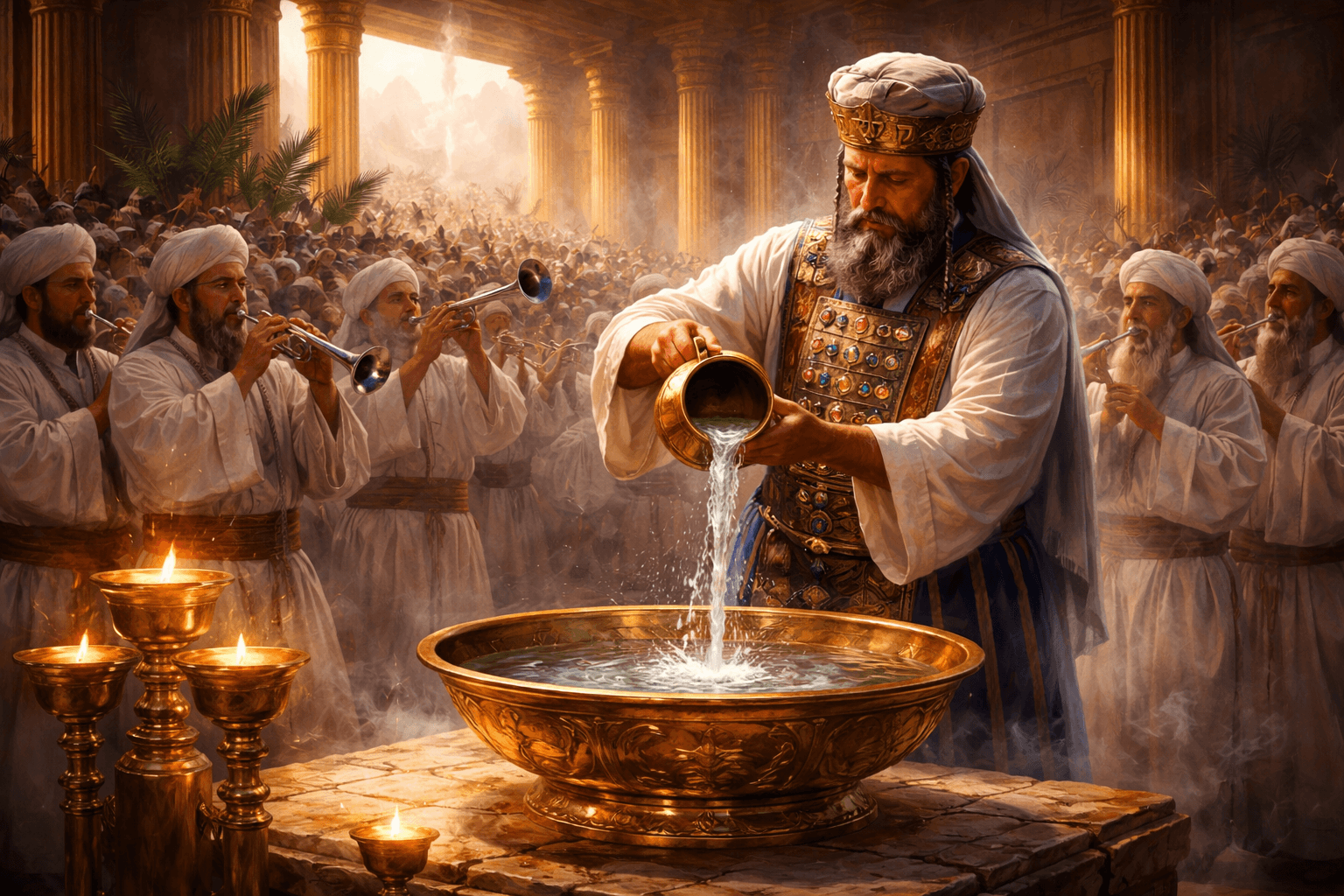
The Feast of Tabernacles (Sukkot) was a seven-day celebration commanded by God, where Israel lived in temporary shelters to remember His provision in the wilderness and to rejoice at the final harvest (Leviticus 23:33–43; Deuteronomy 16:13–15). It was marked by joy, gratitude, and dependence on God.
By the time of Jesus, an additional ritual had become part of the celebration—a water-pouring ceremony known as Simchat Beit Hashoavah, the Festival of Water Drawing. Priests would draw water from the Pool of Siloam, carry it to the temple with the sound of the shofar, and pour it out at the altar along with wine. This ceremony marked the beginning of earnest prayers for rain and was filled with great rejoicing.
It was in this exact moment that Jesus stood and declared:
“If anyone thirsts, let him come to Me and drink”
When Jesus said this, the Jewish leaders and the people present knew that He was calling Himself God. He was revealing that what the ritual symbolized—living water—would be fulfilled in Him through the Holy Spirit.
The Feast of Tabernacles was always about Jesus and His mission, just like all the elements of the Law of Moses.
Jesus was also directly echoing the invitation found in:
Isaiah 55:1
“Come, all you who are thirsty, come to the waters…”
The Same Message Throughout Scripture
God has communicated the same message throughout Scripture—from creation, to the Law of Moses, to the Prophets.
The message is this: God Himself would come in human form to save the people He loves (John 3:16). He paid the price for our salvation. And now, the power of that salvation is carried out through the Person of the Holy Spirit.
The Holy Spirit is the One who saves, cleanses, sanctifies, and transforms. It is not by might, nor by power. Zech 4:6
This same message is expressed in water baptism—a visible sign of an inward reality. We wrote about this here
And it is the same message seen in the story of Moses:
- God’s people are thirsty on their journey
- God points them to the Rock (Jesus)
- The Rock gives living water (the Holy Spirit)
- The Spirit quenches their thirst and gives life
As Jesus said:
“Whoever drinks of the water that I shall give him shall never thirst… it will become in him a well of water springing up into everlasting life” (John 4:14)
And as Paul affirms:
“You were washed… sanctified… justified… by the Spirit of our God” (1 Corinthians 6:11)
The message is crystal clear in one of the last verses in the whole Bible.
Revelation 22:17 (ESV) “The Spirit and the Bride say, ‘Come.’ And let the one who hears say, ‘Come.’ And let the one who is thirsty come; let the one who desires take the water of life without price.”
The bride (the church) speak and the Holy Spirit is the power of the Gospel. Salvation is Free. Because Jesus paid the Price.