James vs. Paul: Who Got Abraham Right?
One of the most famous quotes in Scripture is:
“Faith without works is dead” (James 2:17).
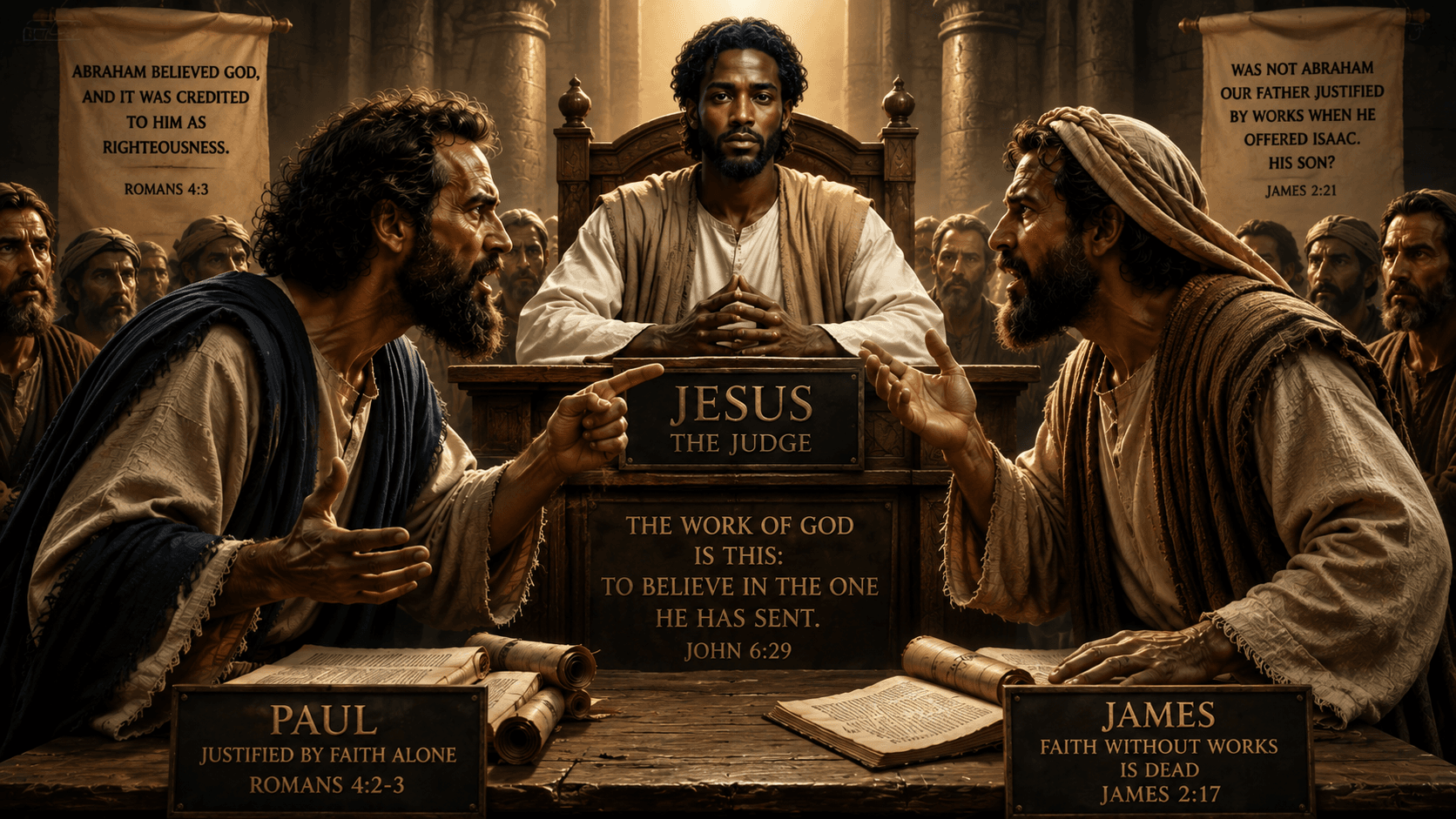
This statement was written by James, one of the leaders of the early church. Much evidence points to the fact that this is James, the brother of Jesus. He was Jewish and presided over the Jerusalem Council in Acts 15 (we wrote about this here). His words and teachings carry significant weight. His teachings are often compared to those of Paul and Peter.
As students of the Word, our job is to weigh every text of the Bible against the overall theme of Scripture and the character of God. The character of God is fully revealed in the person of Jesus Christ, the Son of God, who is God Almighty Himself. Paul described Jesus as the express image of the invisible God. Jesus is the God of the Old Testament.
We are weighing this phrase by James against the words of Jesus and the character of Jesus.
- Is faith without works dead?
- Is faith alone enough?
- What role do works play here?
- What are works?
- What is faith?
What Is Faith?
The core of our belief is faith in the finished work of Jesus Christ and His mission. The central belief is faith in the death, burial, and resurrection of Jesus Christ. It is really that simple. Jesus explicitly stated this in John 3:16, that whoever believes in Him will not perish but have everlasting life.
Faith is the acceptance of God's grace.
"Very truly I tell you, whoever hears my word and believes Him who sent me has eternal life and will not be judged but has crossed over from death to life." — John 5:24
"Believe in the Lord Jesus, and you will be saved—you and your household."— Acts 16:31
So, this is the context of the faith that James was talking about in James 2:14–26. He was writing to Jewish believers who were scattered outside Israel (James 1:1). To support his claim, James pointed to Abraham. Therefore, we know James was talking about the same faith that Paul was talking about.
What Are Works?
In James 1–2, James teaches that genuine faith is demonstrated through practical obedience and love rather than mere words. He points to actions such as persevering through trials (1:12), resisting temptation (1:13–15), controlling anger (1:19–20) and the tongue (1:26), obeying God's Word (1:22–25), caring for orphans and widows (1:27), and remaining morally pure (1:27).
He also emphasizes rejecting favoritism toward the rich (2:1–4), loving one's neighbor (2:8), showing mercy (2:13), and meeting the physical needs of the hungry and poorly clothed (2:15–16).
Works, as explained by James, are what we do to prove our faith according to Him.
Is Faith Without Works Dead?
This teaching by James seems simple and reasonable when evaluated on the surface. What could be wrong with encouraging people to do good works in society?
However, in the context of faith and salvation, this statement appears to be the complete opposite of the Gospel. The Gospel is the Good News of salvation. The Good News is that we are saved by grace alone. This is what separates Christianity from other religions and worldly systems.
Every other religion promotes good works. There is nothing wrong with good works in themselves. It becomes a heresy when we believe that we are justified by them.
Justification by Works
I know what you are thinking: perhaps we are taking James out of context. Maybe James was not talking about salvation.
James was actually talking about salvation. This is evident because he used Abraham as an example.
21 Was not Abraham our father justified by works when he had offered Isaac his son upon the altar? 22 You see that faith was working together with his works, and by works faith was made perfect.23 And the Scripture was fulfilled which says, “Abraham believed God, and it was credited to him as righteousness,” and he was called the Friend of God. --James 2
Unfortunately, James quoted the Scriptures out of context. Abraham was not justified by works or by faith plus works, as James appears to suggest.
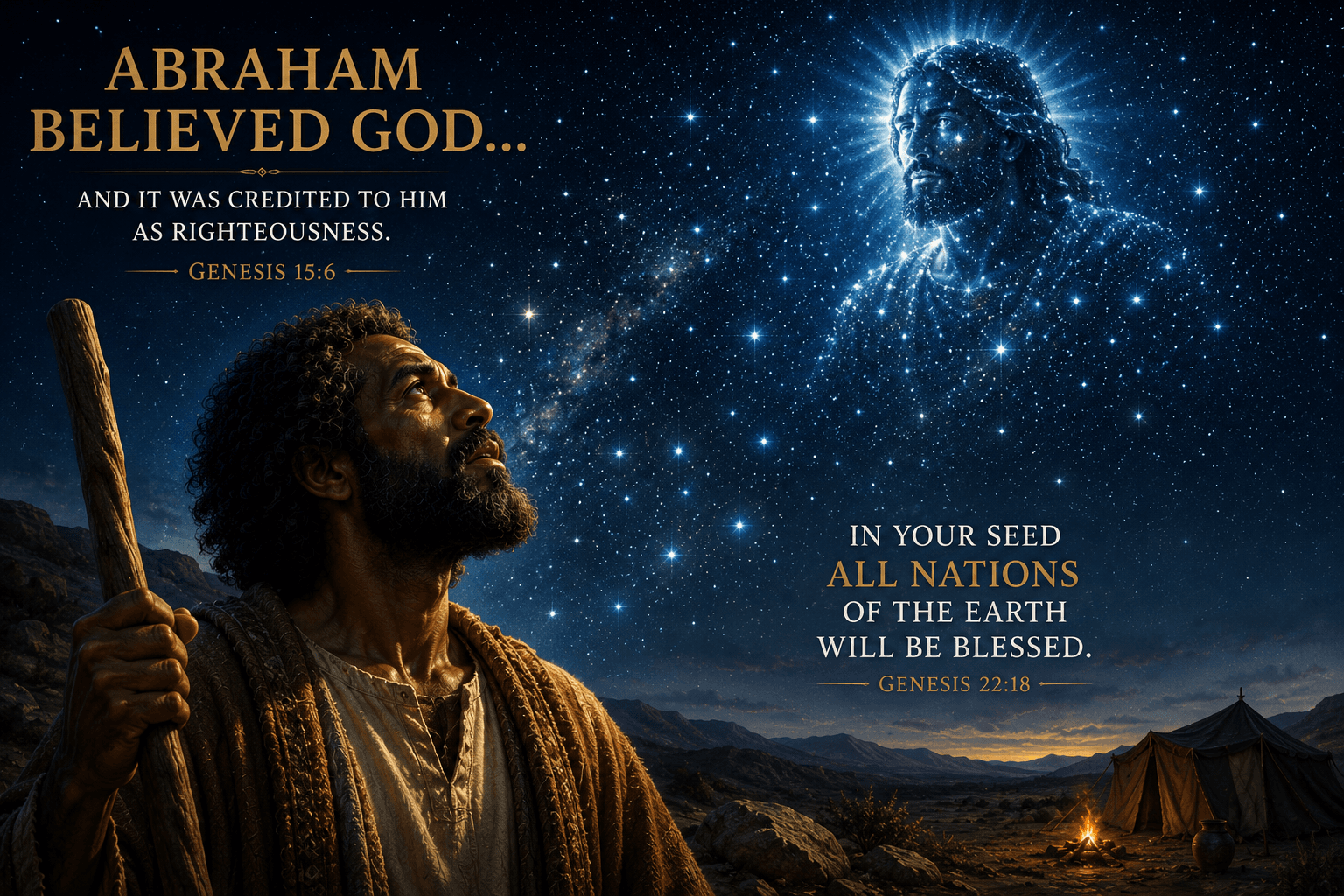
James was referring to Genesis 15:6, where Abraham believed God and was counted righteous. This event occurred when God promised Abraham that his descendants would be as numerous as the stars and impossible to count. Abraham believed God, and it was counted to him as righteousness.Abraham's faith was complete when God declared him righteous.
What about the Isaac's sacrifice? Abraham attempted to sacrifice his son approximately 24–40 years later. James was combining two separate events.
Abraham was justified by faith alone.
Paul explicitly addressed this point to show that we have nothing to boast about before God.
2 If, in fact, Abraham was justified by works, he had something to boast about—but not before God.3 What does Scripture say? "Abraham believed God, and it was credited to him as righteousness."— Romans 4:2–3 (NIV)
Paul is directly contradicting James in that verse. James said Abraham was justified by works while Paul said he was NOT.
In Conclusion
The purpose of this article is not to criticize James' writing. Rather, we must read and interpret the writings of all biblical authors, both before and after the resurrection, through the lens of Jesus and His finished work.
There was a tension between the concept of Grace and Works among the early church as far as 2000 years ago. This was evident in Act 15. The tension still exists today. We must know and hold on to the pure, undiluted Gospel. This is the meaning of worshipping God in TRUTH and SPIRIT.
- Grace is the character of God.
- Faith is the acceptance of that Grace. Faith is believing in the death, burial, and resurrection of Jesus Christ.
- Faith is counted as righteousness by God and sealed by the Holy Spirit (Not works) for once. Eph 1:13-14
- Works, while good, beneficial and noble, are not part of the equation of justification with God (Romans 4:2-3).
Jesus addressed this issue directly:
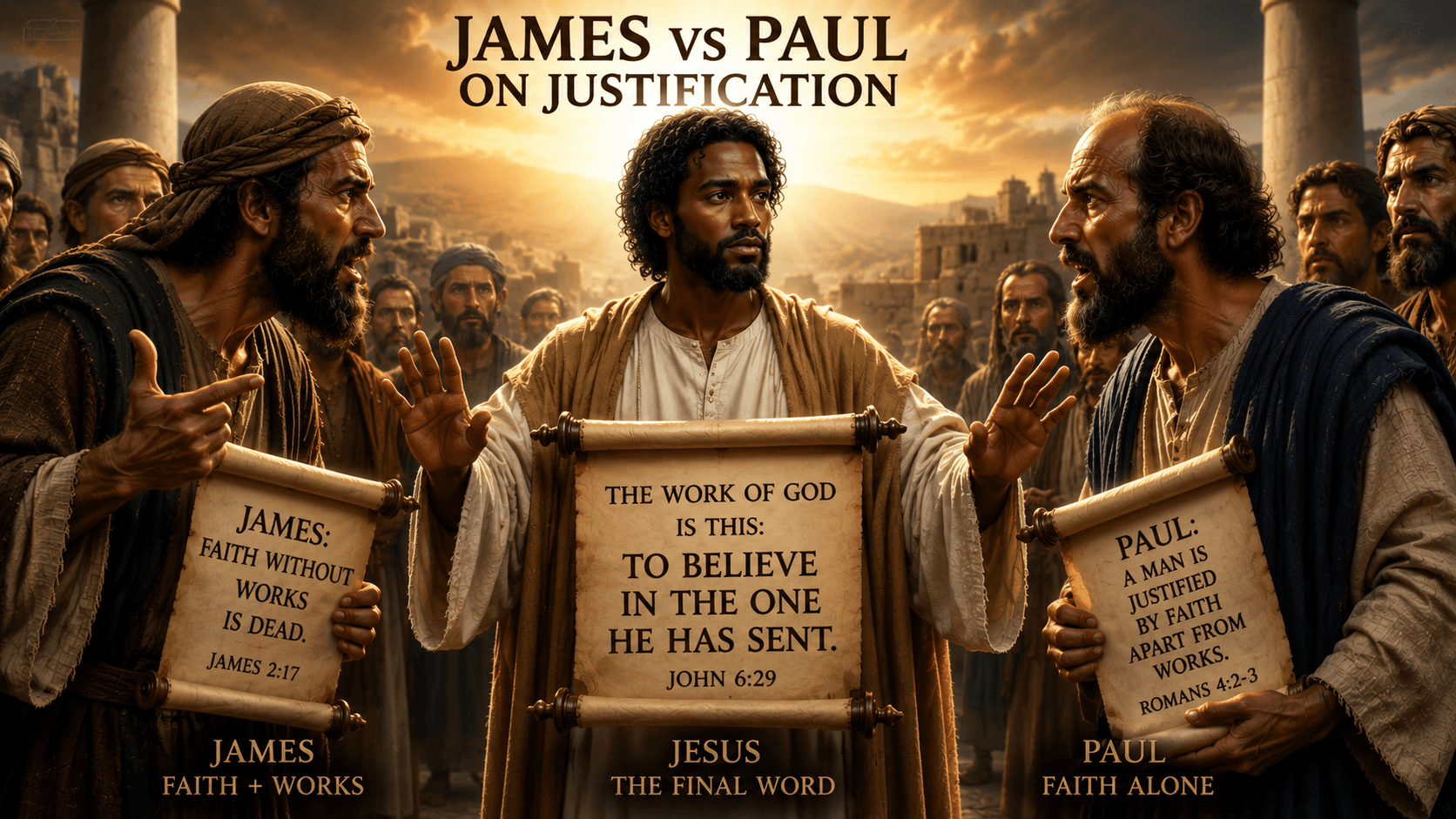
Then they asked Him, "What must we do to do the works God requires?" Jesus answered, "The work of God is this: to believe in the one He has sent."
— John 6:28–29
The work that God requires is Faith in Jesus. The Gospel is not Faith plus works. The Gospel is Faith in Jesus Christ. Faith is not perfected by works. Faith is independent of works.