Jesus Acted Out the Gospel
The story of Jesus washing the feet of His disciples is one of the most well-known accounts in the Gospels. It is recorded in John 13 and is commonly taught as a lesson on humility. Indeed, it beautifully demonstrates the humility of Christ, who willingly took the place of the lowest servant and washed the feet of His own disciples. Some churches even practice foot washing today as a literal ordinance, while others emphasize its spiritual significance.
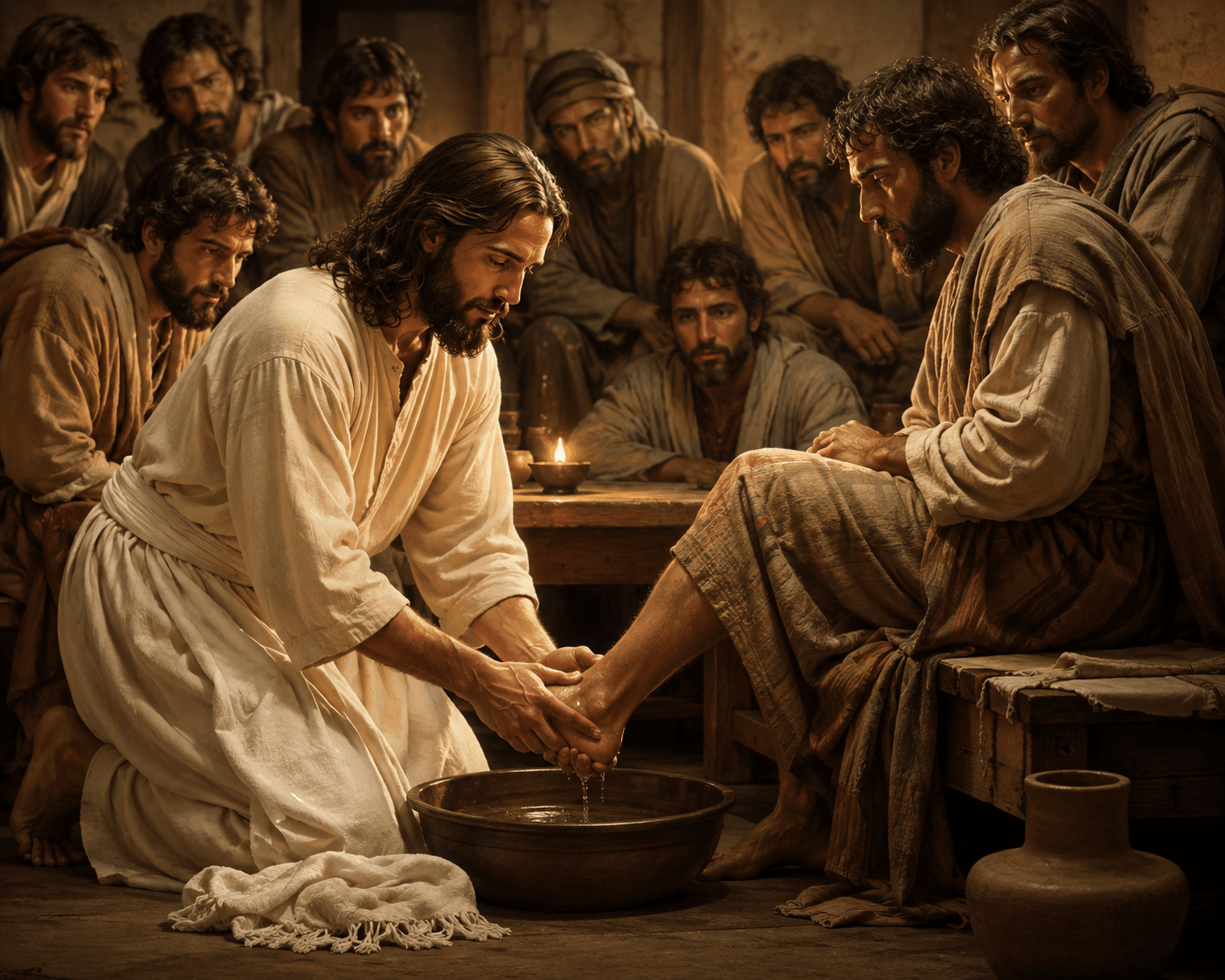
However, I believe there is a much deeper message hidden within this story.
Throughout this blog we have repeatedly shown that the central message of the entire Bible is the death, burial, and resurrection of Jesus Christ, through which God restores mankind into fellowship and intimacy with Himself. I believe John 13 is not merely a lesson in humility—it is a living picture of the entire mission of Jesus Christ.
John could have simply written that Jesus washed the disciples' feet. Instead, he carefully records every movement Jesus makes. He tells us that Jesus rose, laid aside His garments, girded Himself with a towel, poured water into a basin, washed His disciples' feet, took His garments again, and sat down.
Why does John describe every one of these actions so carefully? I believe these actions beautifully mirror the redemptive mission of Christ.
Jesus Rose and Laid Aside His Garments
John 13:3–4 'Jesus knowing that the Father had given all things into his hands, and that he was come from God, and went to God; He riseth from supper, and laid aside his garments...'
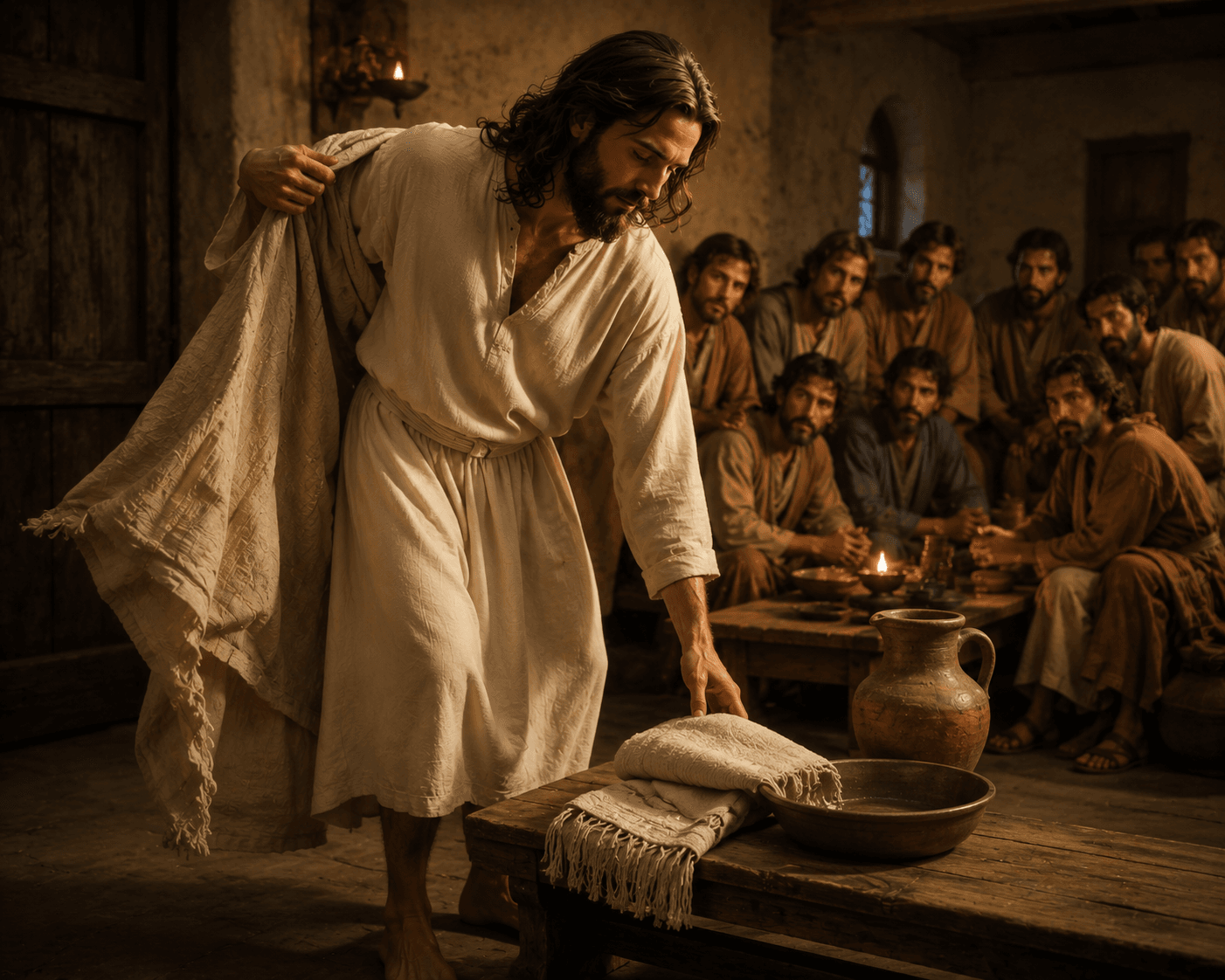
Before describing the foot washing, John reminds us that Jesus knew He had come from the Father and was returning to the Father. Throughout Scripture, garments often represent glory, honor, authority, righteousness, and identity. Jesus laying aside His outer garment beautifully reflects what Paul describes in Philippians 2. Jesus did not cease to be God. Rather, He voluntarily laid aside the visible privileges and glory of heaven and humbled Himself by taking on human nature.
Philippians 2:6–7 teaches that although Christ was in very nature God, He took the nature of a servant. Colossians 2:9 reminds us that in Christ all the fullness of Deity dwells bodily. Colossians 1:16–17 declares that all things were created through Him and for Him. The Creator willingly entered His own creation.
Jesus Girded Himself with a Towel
John records that Jesus took a towel and girded Himself. In Jewish culture, washing another person's feet was one of the lowest acts of service, usually performed by the lowest household servant or slave. Yet Jesus willingly embraced that role.
This beautifully reflects Philippians 2:7—'taking the very nature of a servant.' Isaiah 53:2–3 foretold that the Messiah would come without worldly splendor. The glorious Creator clothed Himself with humanity and came as a servant.
Jesus Poured Water and Washed Their Feet
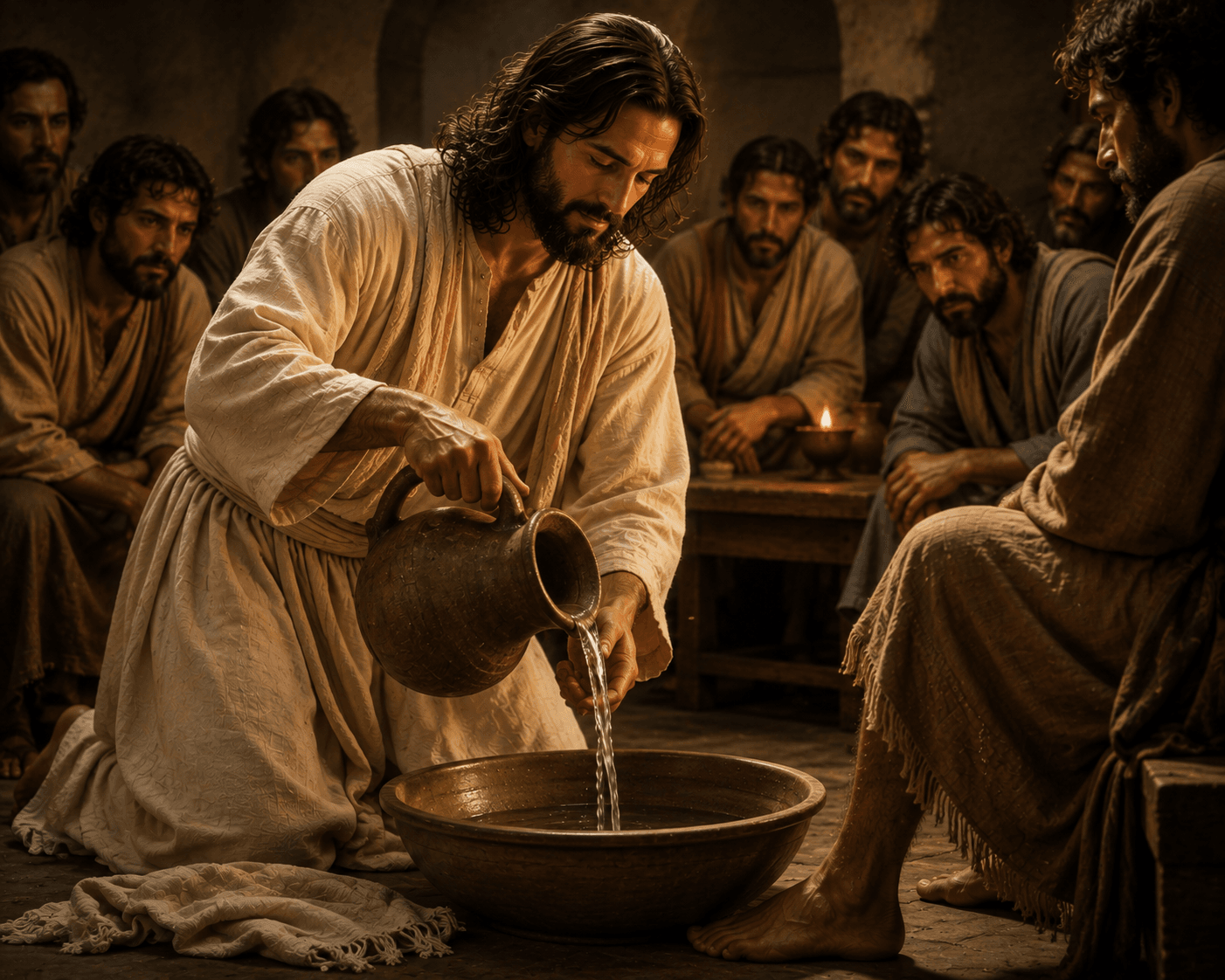
John 13:5 tells us that Jesus poured water into a basin and began washing the disciples' feet.
Throughout Scripture, water frequently symbolizes cleansing and is often associated with the work of the Holy Spirit. Ezekiel 36:25–27 promises that God Himself will cleanse His people and put His Spirit within them.
When Peter objected, Jesus answered, 'Unless I wash you, you have no part with Me.' Jesus did not tell Peter to wash himself. He insisted that He must be the One who washes him. This is the Gospel. We cannot cleanse ourselves.
1 Corinthians 6:11 says believers are washed, sanctified, and justified by the Spirit of God. Titus 3:5 speaks of the washing of regeneration and renewing by the Holy Spirit. The redemption accomplished by Christ is applied to believers through the work of the Holy Spirit.
Jesus Took His Garments Again and Sat Down
After washing their feet, Jesus took His garments again and sat down. John did not need to mention this detail, yet he does.
Just as laying aside His garments mirrors Christ's humiliation, taking His garments again points to His exaltation after completing redemption. Hebrews 1:3 declares that after providing purification for sins, He sat down at the right hand of the Majesty in heaven. Philippians 2:9 declares that God highly exalted Him.
Peter's Objection
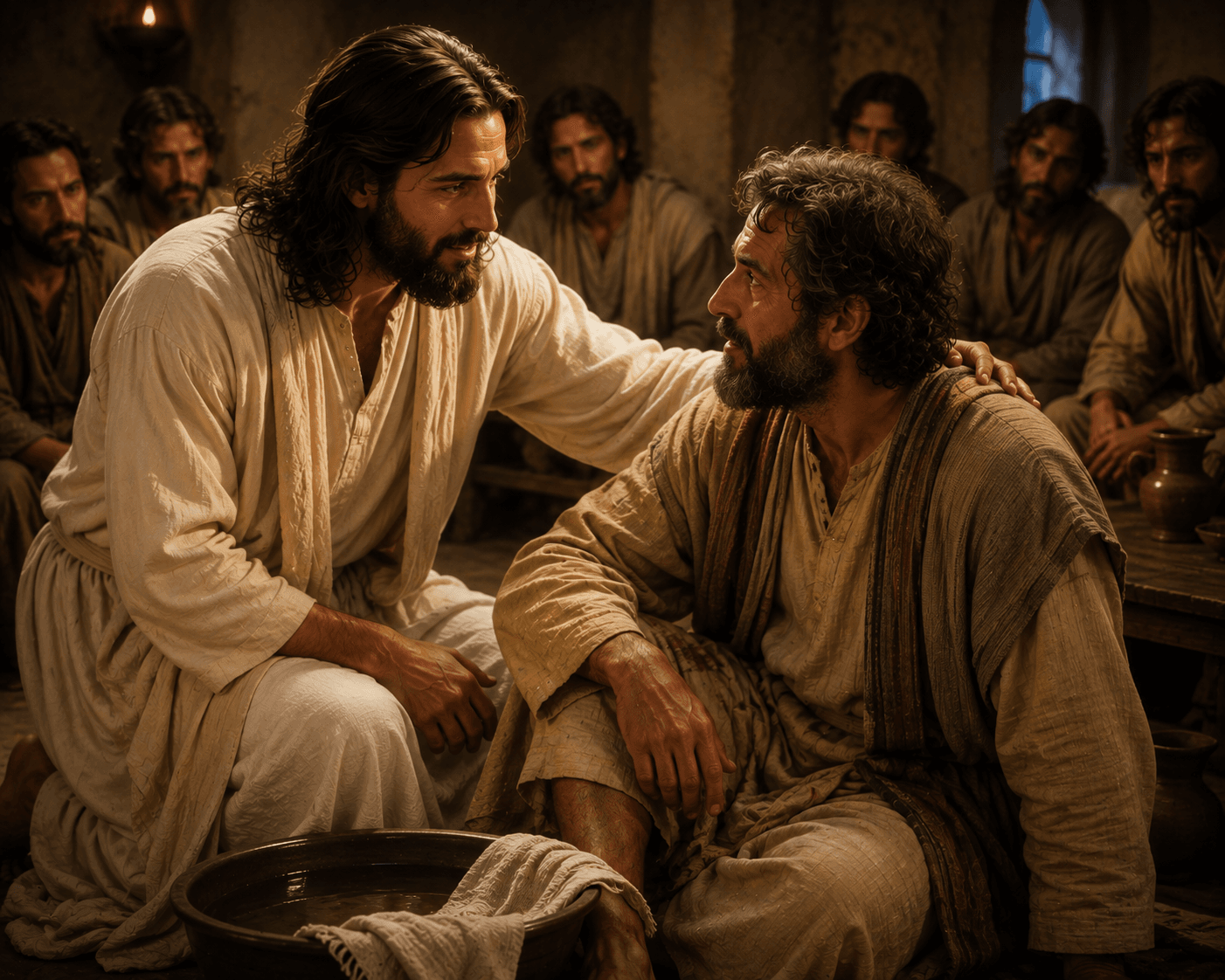
Peter objected because he viewed the event only from a human perspective. Jesus replied, 'Unless I wash you, you have no part with Me.'
This is not merely the point of John 13—it is the point of the Gospel. Humanity cannot restore itself to God. The eternal Son came from heaven, humbled Himself, took the form of a servant, died for our sins, rose again, and now cleanses His people through the work of the Holy Spirit.
Perhaps John 13 is more than a lesson on humility. Perhaps, before going to the cross, Jesus quietly acted out the story of redemption before the eyes of His disciples.
Finally, it is important to note that it was Jesus' own decision to come down from heaven. It was His decision to lay aside the glory and privileges of heaven and humble Himself for our sake. It was Jesus who washes us through the work of the Holy Spirit.
Scripture teaches that the Holy Spirit is our seal (Ephesians 1:13–14). The Holy Spirit is the third Person of the Godhead, fully God and equal in essence with the Father and the Son.
The disciples played no role in the act of foot washing. Their only response was to receive what Jesus chose to do for them. Peter initially exercised his free will by refusing Jesus, but Jesus insisted, saying, "Unless I wash you, you have no part with Me." Peter ultimately submitted and allowed Jesus to wash him.
This goes to the heart of the discussion surrounding eternal security and whether a believer can lose his or her salvation. It also speaks directly to the relationship between works and grace. Salvation is God's work from beginning to end. We are saved by His grace, and through the ongoing work of the Holy Spirit we are continually transformed into the image of Christ. Our responsibility is not to earn our salvation but to believe in the One whom God has sent and to trust the work that He alone has accomplished on our behalf.
I pray that we continually get more revelation on the dept of Jesus' love for us.