The Day Moses Broke the Prophetic Picture
One of the most interesting—and perhaps mind-boggling—decisions God made in the Old Testament was His decision not to allow Moses to enter the Promised Land. At first glance, this decision seems extremely harsh. After all, this is the same Moses whom God used to perform mighty works. This is the same Moses who pleaded with God several times on behalf of the very Israelites who constantly complained.
So why, in what appears to be a moment of weakness on Moses’ part, would God make such a severe decision and deny him entry into the Promised Land? Where is the God of grace in this story?
The miracle of water coming from a rock occurred twice in the Old Testament.
The first time happened at Rephidim early in Israel’s journey after leaving Egypt. The people complained to Moses because there was no water. God instructed Moses to go to a rock at Horeb with the elders of Israel and strike the rock with his staff. When Moses did this, water flowed out for the people to drink. The place was called Massah and Meribah because the Israelites quarreled and tested whether God was truly among them (Exodus 17:1–7).
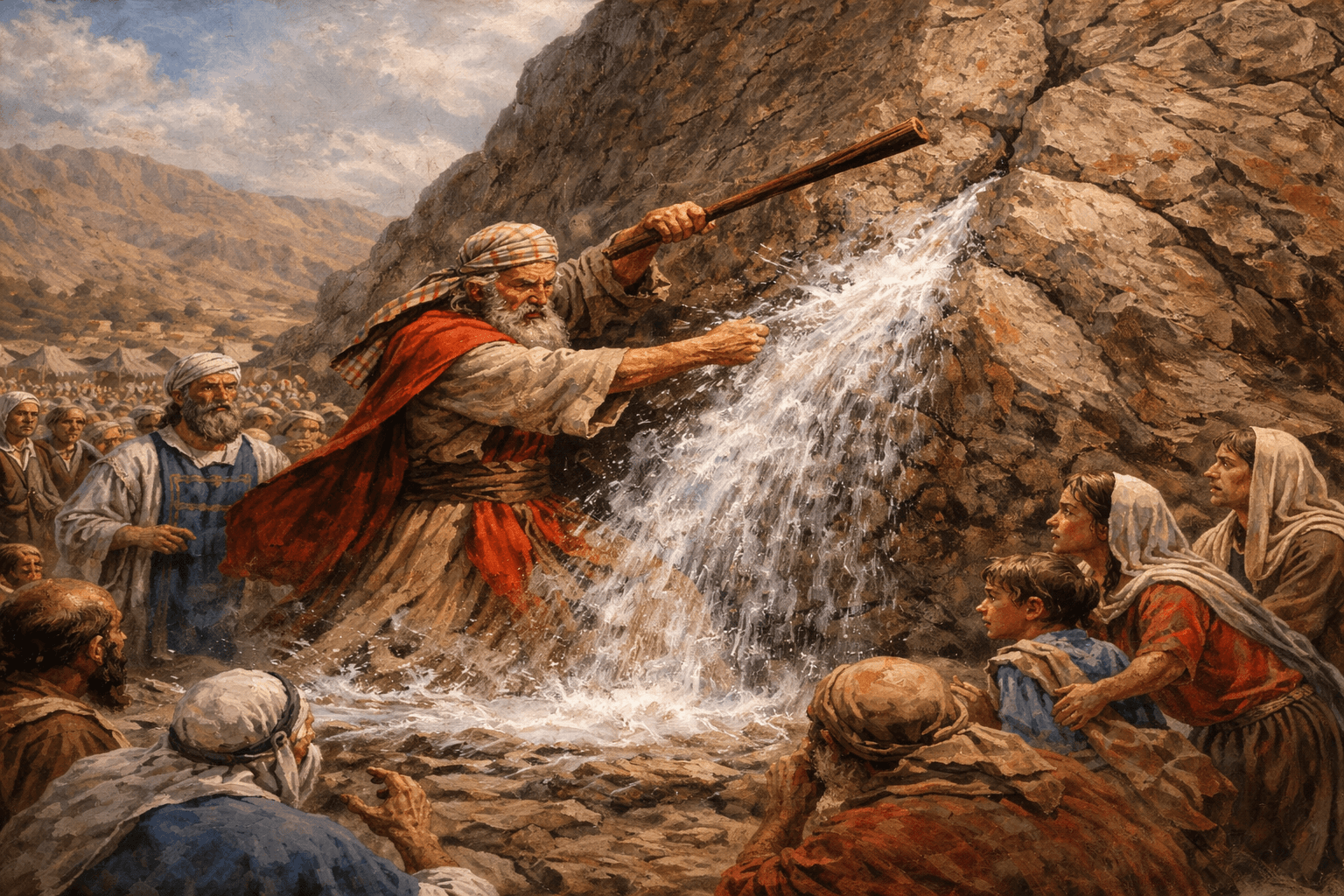
The second time water came from a rock happened at Kadesh in the Desert of Zin during Israel’s wilderness journey. When the people again complained about having no water, God told Moses to speak to the rock so that it would produce water. Frustrated with the people, Moses instead struck the rock twice with his staff, and water still came out for everyone to drink. However, because Moses did not follow God’s instruction and failed to honor Him before the people, God told Moses and Aaron that they would not enter the Promised Land. The place was again called Meribah, meaning “quarreling” (Numbers 20:1–13).
So why did God punish Moses?
To fully understand any story in the Bible, two important principles must be considered.
- First, the ultimate context of Scripture is Jesus. Of course, there are many lessons throughout the Bible, but the central message of Scripture is Jesus Christ and His mission to redeem humanity.
- Second, the Old Testament contains types and shadows that point to a greater spiritual reality. As Colossians 2:16–17 explains:“Therefore let no one judge you in food or in drink, or regarding a festival or a new moon or sabbaths, which are a shadow of things to come, but the substance is Christ.”
The rock in both instances is a type and shadow of Jesus Christ. The New Testament explicitly confirms this.
1 Corinthians 10:4 says: "They all drank the same spiritual drink. For they drank from the spiritual Rock that followed them, and that Rock was Christ.”
The revelation of God as the Rock appears throughout the Old Testament.
From Moses: Deuteronomy 32:4 — “He is the Rock, his works are perfect, and all his ways are just.”
From David: Psalm 18:2 — “The LORD is my rock, my fortress and my deliverer.”
From Isaiah: Isaiah 26:4 — “Trust in the LORD forever, for the LORD, the LORD himself, is the Rock eternal.”
Hopefully by now you can see the connection.
The Promised Land
The Promised Land in the Old Testament is also a type and shadow of the true rest found in Christ. This rest ultimately points to Zion—not merely a physical place, but a spiritual reality.
The author of Hebrews explains this clearly:
Hebrews 4:8–9“For if Joshua had given them rest, God would not have spoken later about another day. There remains, then, a Sabbath-rest for the people of God.”
The true rest occurs at salvation. It is not rest from work or from earning a living. It is rest from trying to earn anything from God. It is rest from works in the sense of trying to earn salvation, redemption, or intimacy with our Creator. This is grace.
So why did God stop Moses from reaching the Promised Land?
Because he struck the Rock.
Why Was Moses Punished?
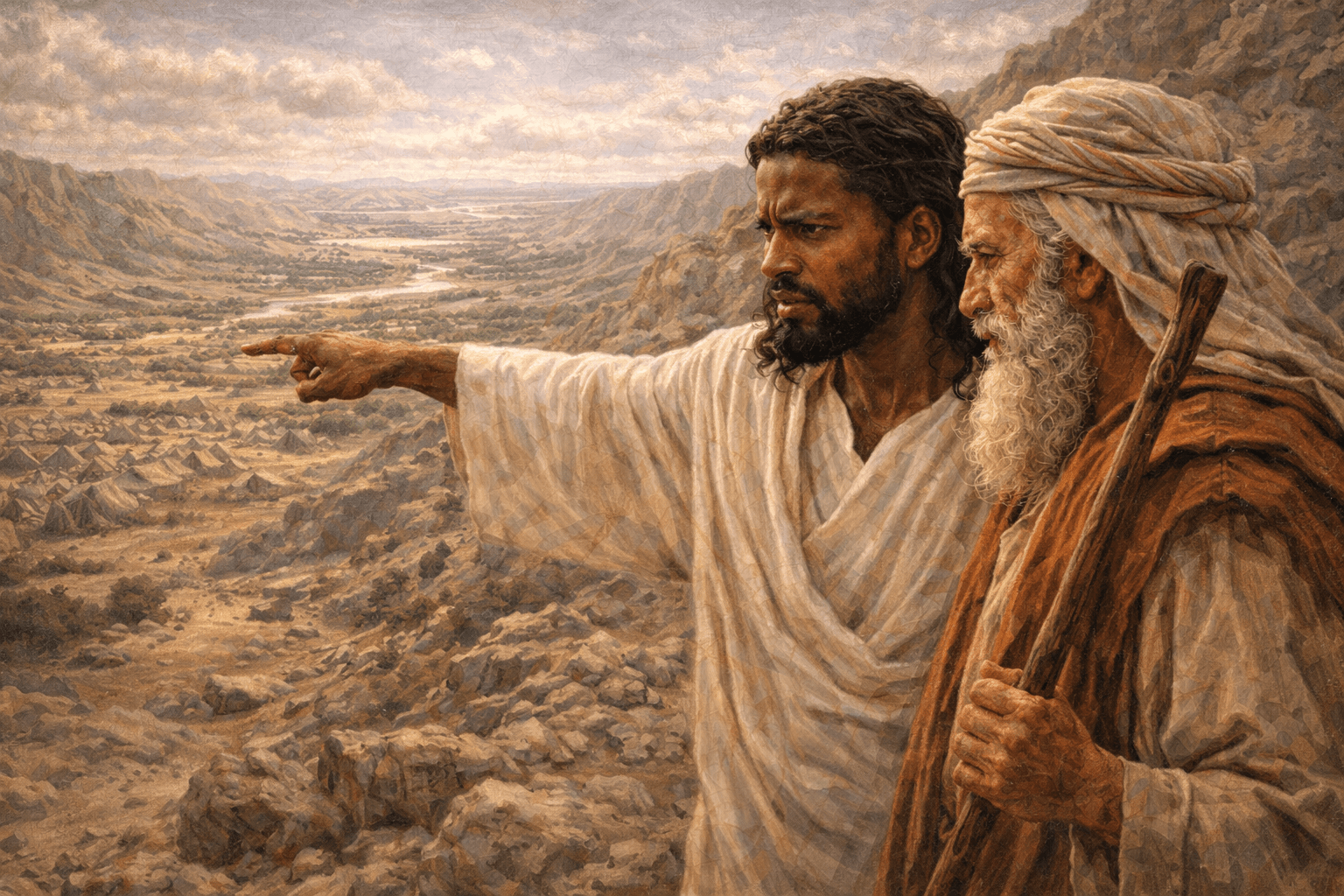
Moses striking the rock the first time was a prophetic event pointing to the fact that Jesus would be punished once for our sins. God’s instruction in the first instance was very specific.
Exodus 17:6 “Strike the rock, and water will come out of it for the people to drink.”
The prophet Isaiah later alluded to this suffering Messiah:
Isaiah 53:5 “But he was pierced for our transgressions, he was crushed for our iniquities; the punishment that brought us peace was on him, and by his wounds we are healed.”
Jesus was to die once.
Hebrews 7:27 “He sacrificed for their sins once for all when he offered himself.”
Hebrews 10:10 “We have been made holy through the sacrifice of the body of Jesus Christ once for all.”
1 Peter 3:18 “For Christ also suffered once for sins, the righteous for the unrighteous, to bring you to God.”
In the second instance, God’s instruction was different. Moses was told to speak to the rock.
Numbers 20:8 “Speak to that rock before their eyes and it will pour out its water.”
The rock had already been struck once, which prophetically pointed to the death of Christ. After that, everything is received by faith.
When Moses struck the rock the second time, he disrupted that prophetic picture. It became an act of unbelief.
Numbers 20:12 explains the issue clearly: “Because you did not trust in me enough to honor me as holy in the sight of the Israelites, you will not bring this community into the land I give them.”
Moses’ offense was not merely that he physically struck the rock. According to God, the deeper issue was that he did not trust God enough to honor Him as holy. He did not trust the fact that the rock has been struck once and for all. It is finished (John 19:30). All Moses needed to do was just to SPEAK.
Conclusion
This is what we have covered;
- Jesus Is The Rock .
- The promise land is our place of rest that we entered at Salvation.
- Moses' did not enter the "place of rest" because of unbelief in the Finished work.
We honor God and become intimate with God ONLY by placing our faith in the finished work of Christ—the Rock that was struck once. This is not earned by anything that we do. It is not earned by giving offering. It is not earned by righteous anger, which moses had. It is not earned by seemingly praying long hours. It is not earned by our false sense of morality. Jesus did ALL the work needed to enter the place of rest and regain intimacy with Him. All we have to do is to have faith.
Bonus
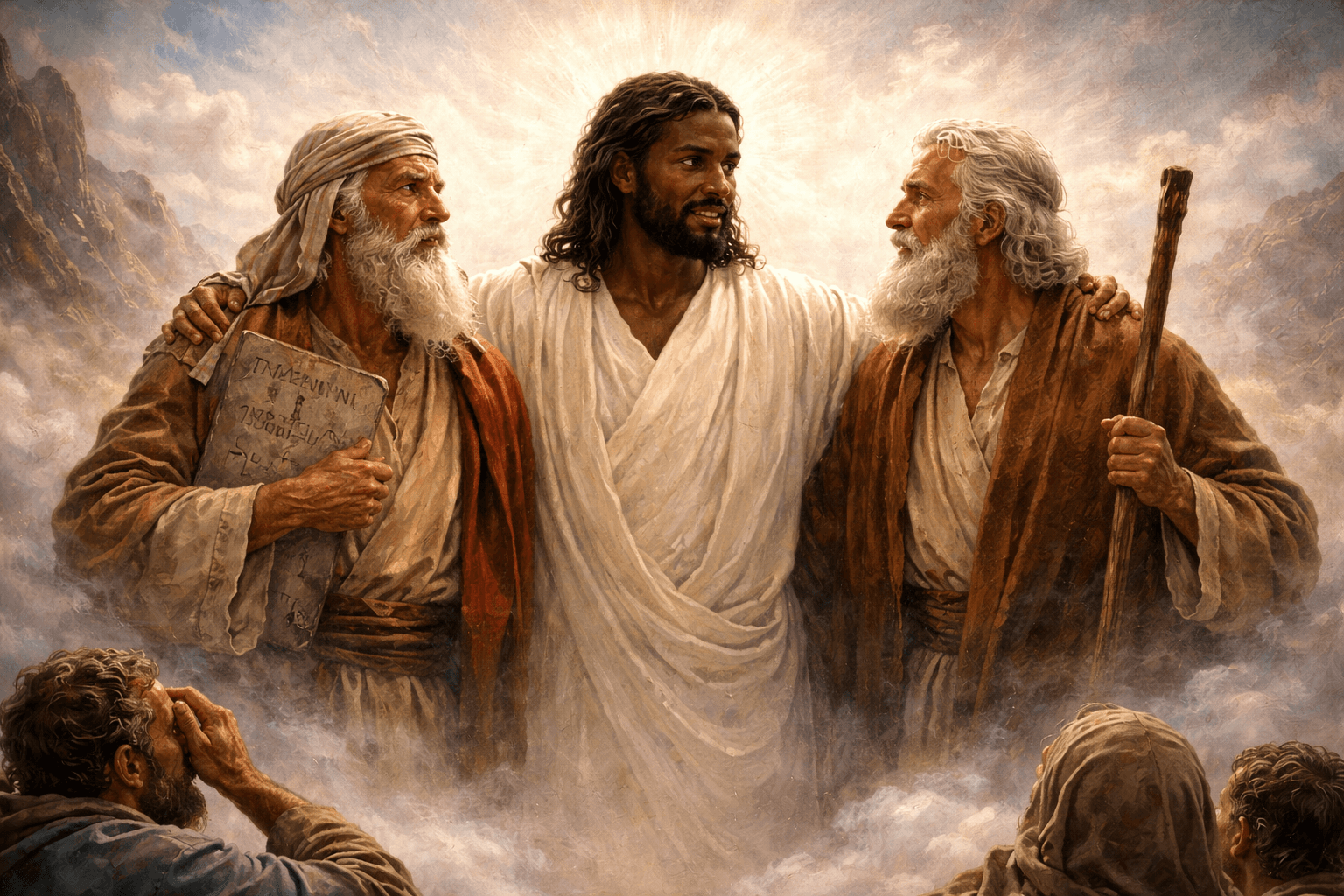
Interestingly, Moses did eventually appear in the Promised Land during the Transfiguration of Jesus, alongside Elijah THROUGH JESUS.
I pray that Jesus will continue to reveal Himself to us and the need to Trust Him.
In the next piece, we will explore the Feast of Tabernacles.