Two Mothers, Two Covenants, Two Jerusalems
In the first part of this Grace and Law piece, we made an argument that the Law was fallible. Nothing from God is fallible.
- There was evidence that the Law borrowed from practices during that time.
- Jesus distances Himself from ownership of the Law of Moses.
- The Apostles suggested that it was given to Moses by angels.
- The author of the book of Hebrews explicitly stated that God never wanted the sacrifices of the Mosaic Law.
- Hebrews 8:7 also raises questions about the first covenant, stating, “For if that first covenant had been faultless, then should no place have been sought for the second.”
The Bewitched Galatians.
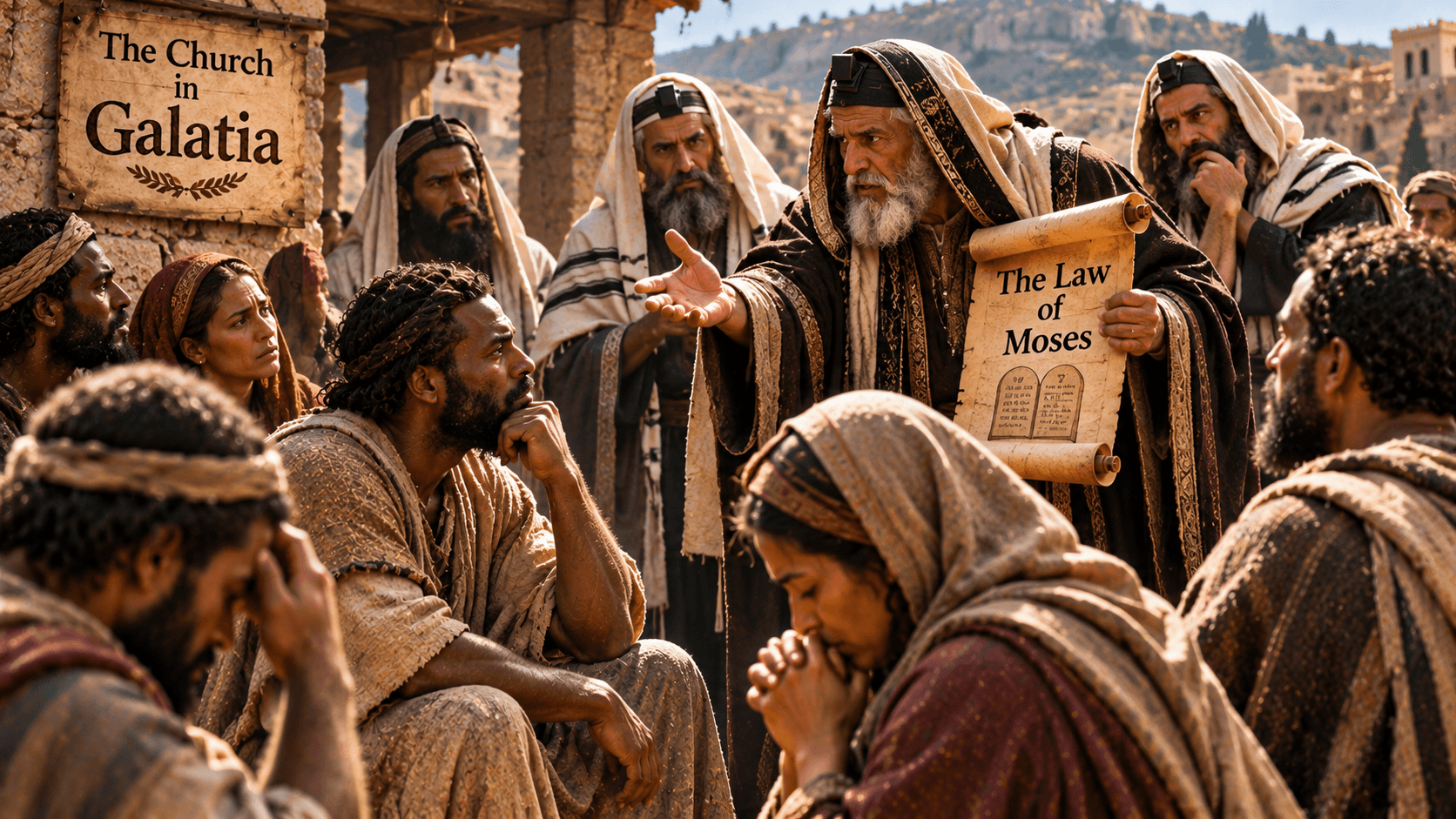
Paul wrote his letter to the churches in Galatia because certain teachers were influencing Gentile believers to adopt the Mosaic Law, particularly circumcision, as a requirement for belonging to God's covenant people. Paul strongly opposed this teaching, reminding the Galatians that they had received the Holy Spirit through faith in Jesus Christ, not through obedience to the Law.
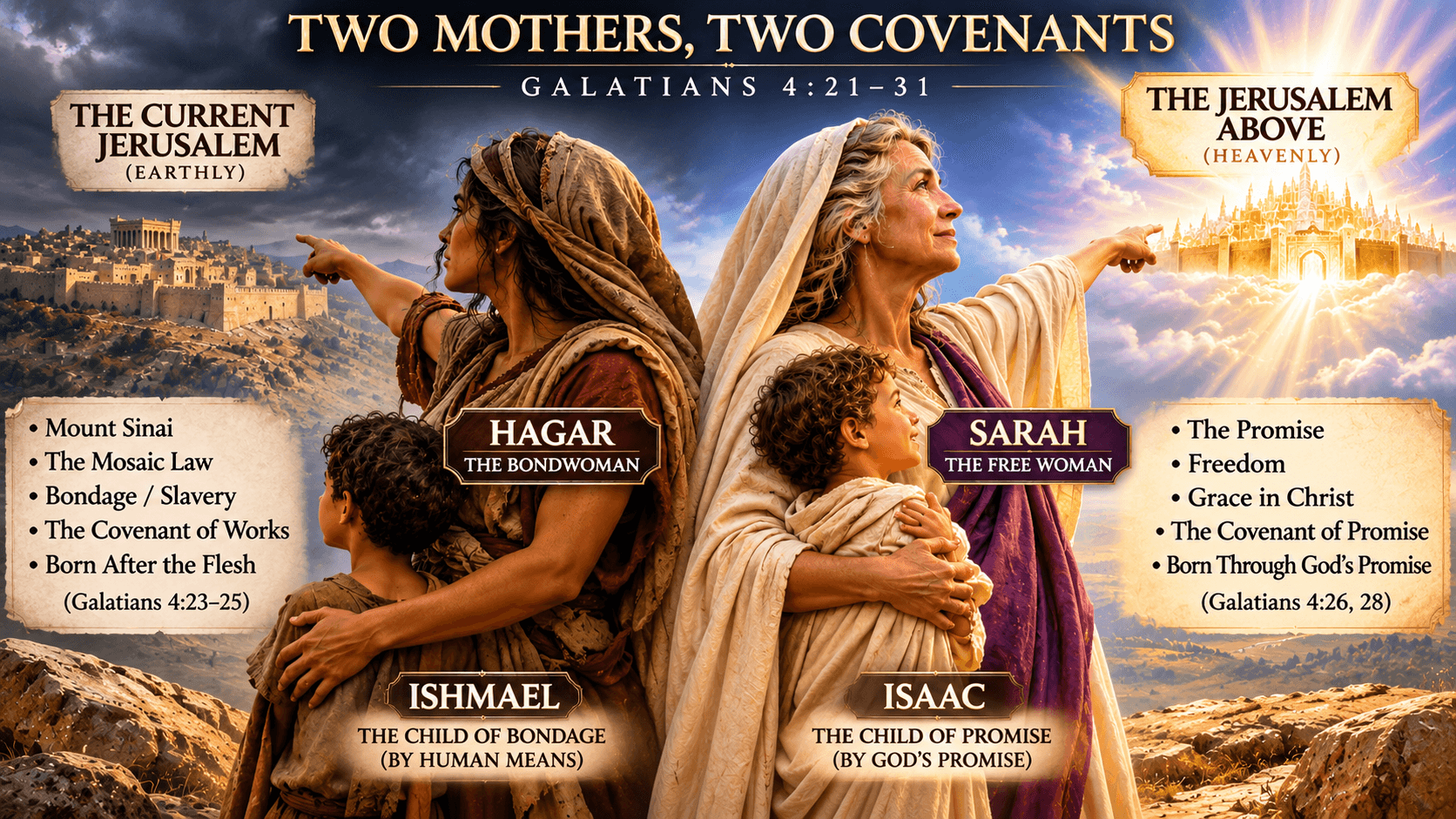
Galatians 4:25 (KJV) “For this Agar is mount Sinai in Arabia, and answereth to Jerusalem which now is, and is in bondage with her children.”
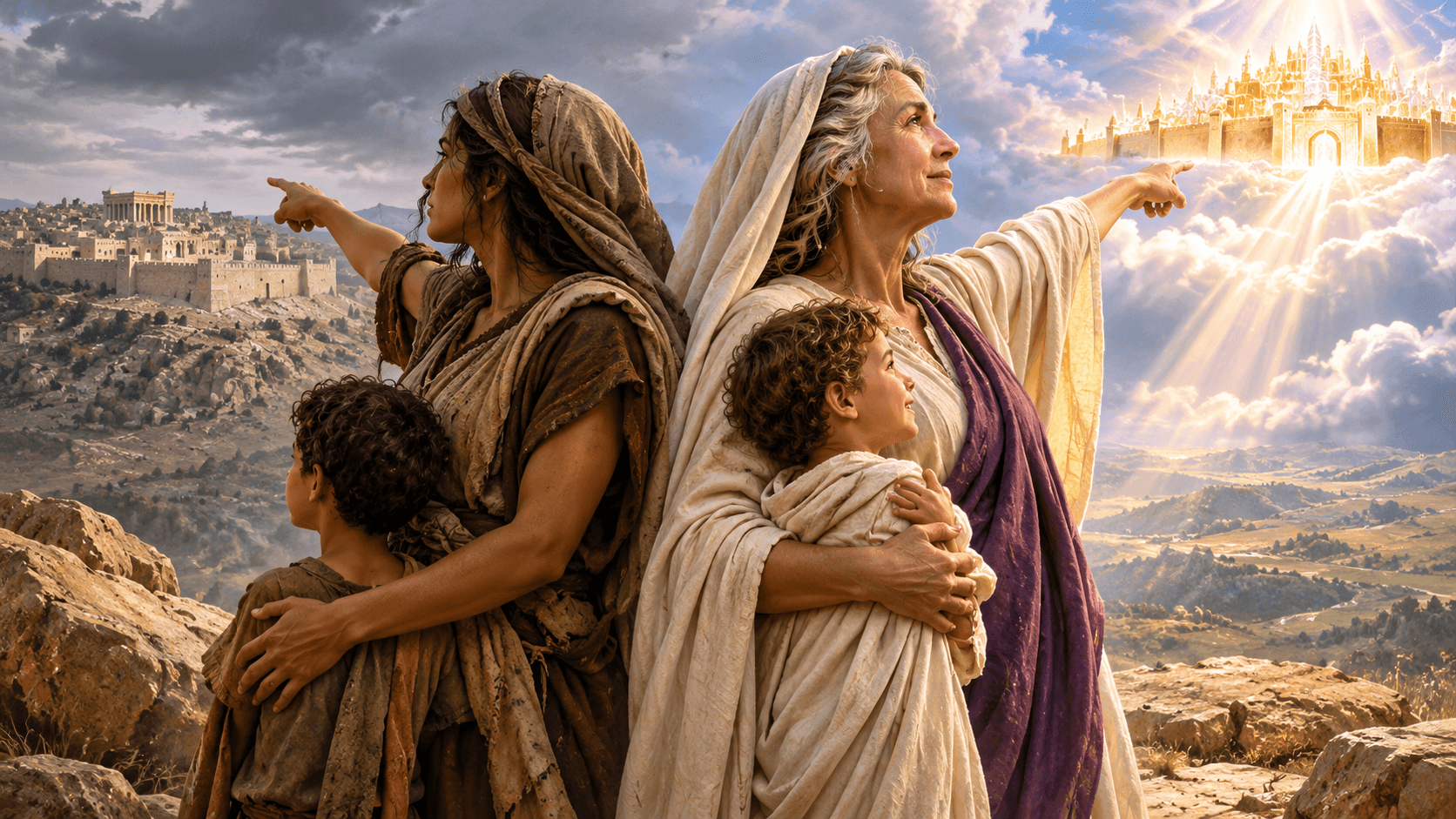
In Galatians 4:21–31, Paul uses the story of Abraham's two women, Hagar and Sarah, to illustrate the difference between slavery under the Mosaic Law and freedom through God's promise. Ishmael was born to Hagar, a slave woman, through ordinary human means, while Isaac was born to Sarah, a free woman, in fulfillment of God's promise.
Interestingly, Paul associates Hagar with Mount Sinai, where the Mosaic Law was given, even though Isaac's descendants were the ones who received that Law.
Abraham → Isaac → Jacob (Israel) → Twelve Tribes → Moses → Mosaic Covenant.
He explains that Hagar represents the covenant that produces bondage and the current Jerusalem. Sarah represents freedom and the heavenly Jerusalem. Paul concludes that believers in Christ, like Isaac, are children of promise rather than children of slavery.
The Mosaic Law is the covenant of slavery. It is the covenant of works. Remember, Sarah was trying to help God out by suggesting that Abraham sleep with Hagar.
Galatians 4:23 (KJV) “But he who was of the bondwoman was born after the flesh…”
When Paul describes Ishmael as being born after the flesh, he is contrasting what was accomplished through ordinary human means with Isaac's birth, which came through God's promise (Spirit). In this allegory, the flesh represents reliance on human effort rather than dependence on God's promise.
The average Christian today would think Ishmael is associated with the religion of Islam. This is actually not what Paul said. Ishmael is the doctrine of works. It is linked with Judaism, to put it blatantly.
Children of Promise
Believers are children of promise. This is the direct opposite of the Mosaic Law. Apostle Paul directly explained in Galatians 3 that the promise given to Abraham is the promise of Jesus.
Galatians 3:16 (KJV) “Now to Abraham and his seed were the promises made. He saith not, And to seeds, as of many; but as of one, And to thy seed, which is Christ.”
Galatians 3:29: Those who belong to Christ become Abraham's seed and heirs of the promise.
Everyone who believes in the death, burial, and resurrection of Jesus Christ is a child of the promise.
Jerusalem Above (Zion)
Galatians 4:26 (KJV) “But Jerusalem which is above is free, which is the mother of us all.”
Paul explains that Hagar stands for slavery and the current Jerusalem/system/Mosaic Law/circumcision, etc. The Jerusalem above is our mother.
The Greek word for mother here is Mētēr (μήτηρ), which literally means “mother.” However, in the context of Paul's allegory, motherhood represents spiritual origin, belonging, and covenantal identity. Just as a child's identity and status were connected to their mother, Paul uses the heavenly Jerusalem to illustrate where believers derive their spiritual identity. In other words, the Jerusalem above is our mother because we are born into freedom through God's promise, rather than into bondage under the Mosaic Law.
Mount Sinai and the heavenly Jerusalem.
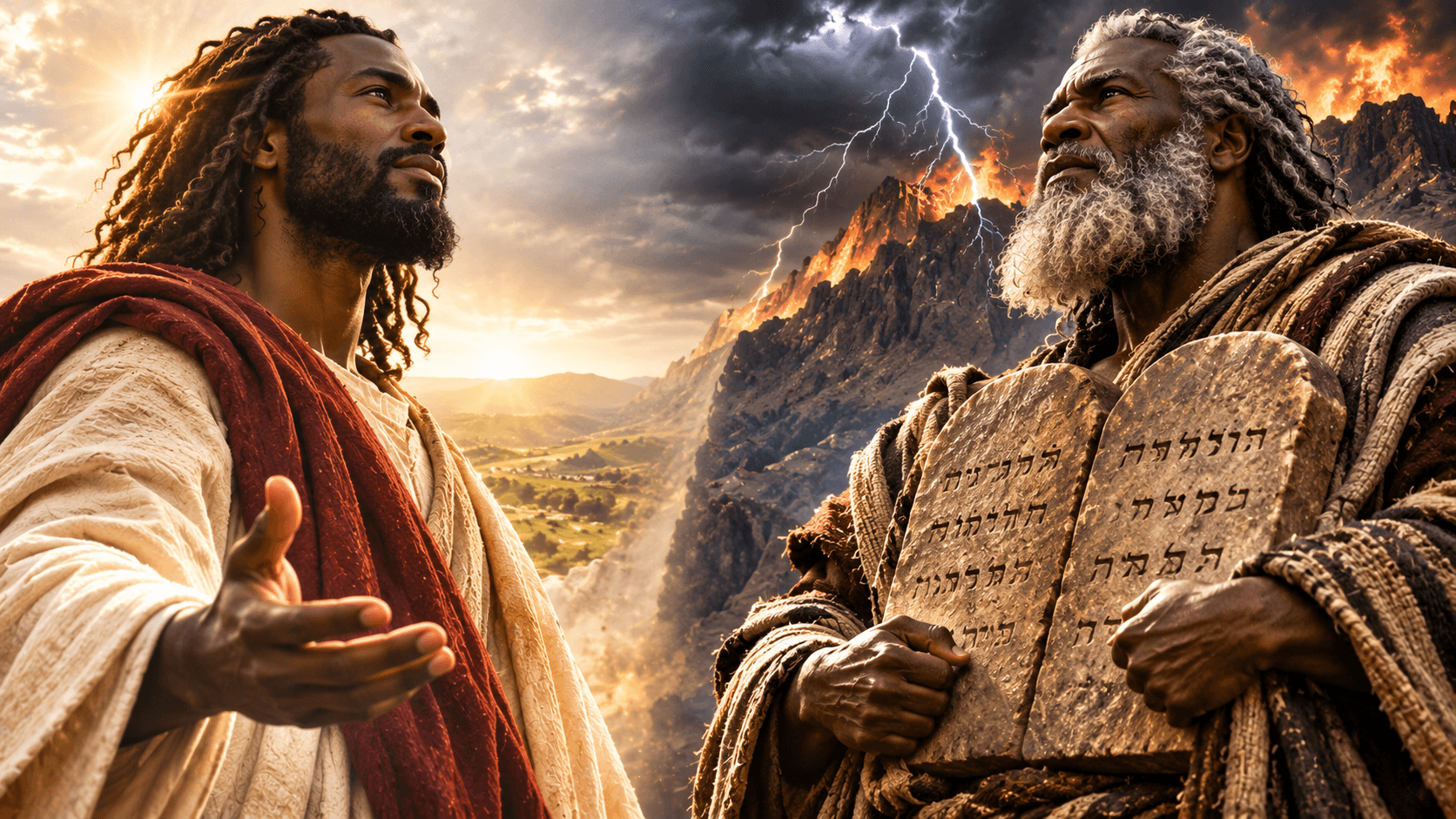
Hebrews 12:18–21 describes the frightening encounter between God and the Israelites at Mount Sinai, where the Law was given. The mountain was surrounded by fire, darkness, and storms, and God's voice filled the people with fear. They were forbidden from approaching or touching the mountain, and even Moses trembled with fear. The passage highlights the terror and restricted access associated with the Sinai encounter. Remember Paul directly linked this Mountain with Hagar (Ishmael’s Mother).
Hebrews 12:22–24 describes the heavenly Jerusalem, the city of the living God, where believers have come through Jesus Christ. Unlike the terrifying experience at Mount Sinai, this heavenly city is filled with a joyful assembly of angels, the redeemed people of God, and the presence of God Himself. Jesus is presented as the mediator of the new covenant. The passage emphasizes the believers' access to God, their heavenly citizenship, and the new relationship established through Jesus Christ.
Hebrews 12:22 (KJV) “But ye are come unto mount Sion, and unto the city of the living God, the heavenly Jerusalem, and to an innumerable company of angels.”
In Conclusion: Grace and Law
The Mosaic Law came after the promise to Abraham, through Moses. The original plan was Jesus. Jesus was the plan before creation (1 Peter 1:19–20, Ephesians 1:4–5, 2 Timothy 1:9). Jesus revealed the true character of God, which is Grace. Jesus demystifies the invisible God.
“We have seen his glory, the glory of the one and only Son, who came from the Father, full of grace and truth.” (John 1:14)
The Mosaic Law brought fear, trembling, darkness, slavery, and restricted access to God. At the heart of the Mosaic Law is the doctrine of works, which is trying to earn something from God. Jesus (God Himself) brought light. Jesus restored intimacy with us, His creation, when we believe. When we believe, we enter the heavenly Jerusalem.
Heavenly Jerusalem is not a goal. It is our current reality.
Jesus brought Grace in the heavenly Jerusalem (Zion), while Moses received the Law at Mount Sinai, which Paul associates with the earthly Jerusalem in Galatians 4:25.